
Concrete Driveways
New concrete driveways, extensions and crossovers for Nambour homes and hinterland acreage, including steep and long rural driveways. Call Nambour Concreters today!
Learn More →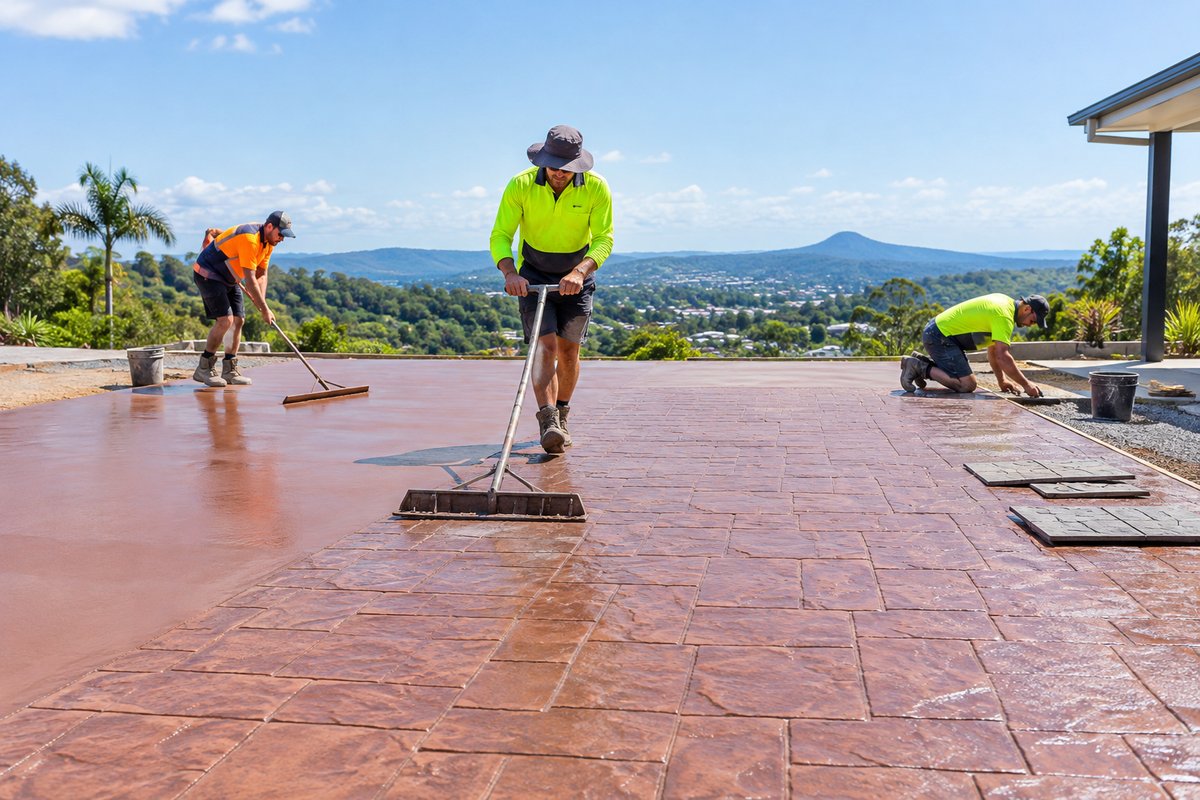
Sick of plain old grey? Coloured, stamped and stencilled concrete adds style to driveways, patios and paths without giving up strength. Contact Nambour Concreters today!
Request a Free Quote
Coloured & stamped concrete in Nambour gives you the look of slate, sandstone, cobblestone or timber boards in a single solid pour. We set the colour with oxide pigment mixed through the batch, or with a colour hardener broadcast by hand over the fresh surface. Then we press flexible stamping mats into the slab while it is still workable. A coloured release agent stops the mats sticking and leaves darker tones in the joints, so the finish looks more like real stone. It suits a front entry, an outdoor entertaining area beside the house, or a pool surround that needs to look tidy without the upkeep of loose pavers.
Hinterland weather shapes how we do this work. Summer storms can roll in over the range quickly, so we watch the forecast closely and keep plastic sheeting on site in case rain arrives before the surface is protected. High humidity slows evaporation and changes the timing for stamping, which is why we read the slab on the day rather than working to a fixed clock. Sealer choice matters here as well. A solvent acrylic laid over damp concrete can trap moisture and turn cloudy, so we only seal once the surface is properly dry and we add anti-slip grit where wet feet or wet tyres will cross it.
Plenty of Nambour homes sit on sloping blocks with reactive clay underneath. Good prep and well-placed control joints matter just as much as the pattern on top. If you like a decorative finish but want more natural grip on a steep run, our exposed aggregate is worth comparing side by side. We often pour a stamped entertaining area together with a plain or coloured path leading out to the yard through our paths and patios work, so the colours and levels match from one area to the next.
From base prep and colour through to stamping, joint cutting and sealing
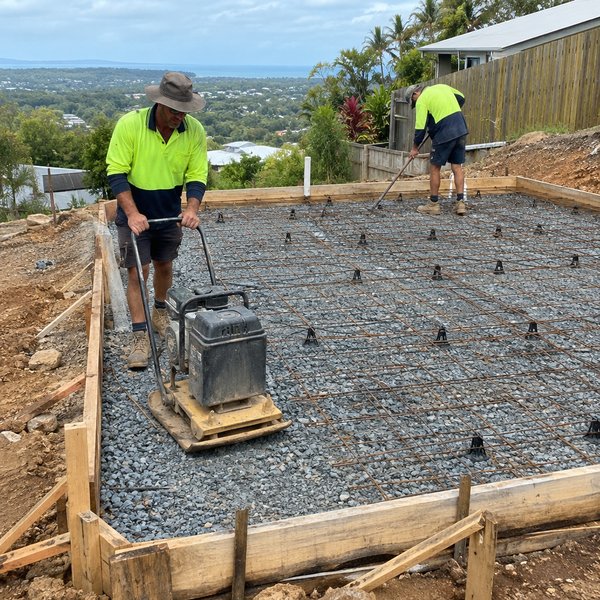
We dig out to the right depth, then compact a crushed rock base so reactive clay has less chance to move the slab. Timber or steel forms set the shape and the fall, so rainwater drains away from the house and off the surface. Reinforcing mesh goes in on bar chairs so it sits within the slab instead of on the ground.
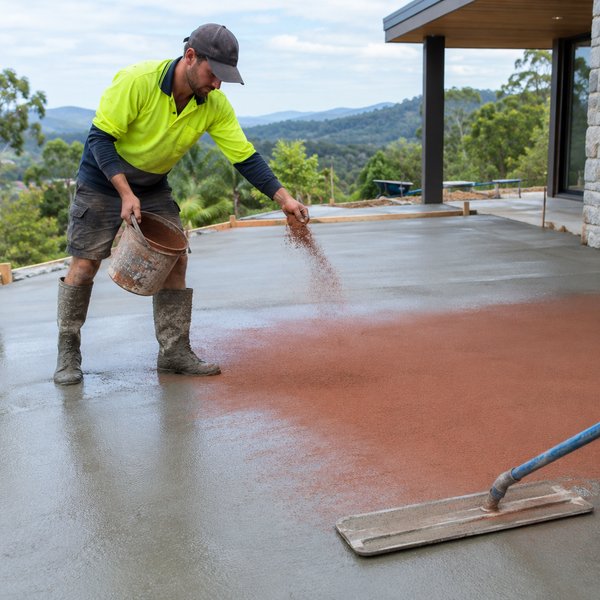
The concrete arrives either pre-coloured with oxide pigment or as a plain mix that we colour on site with a broadcast hardener. We screed and bull float the surface flat, then work the hardener in by hand so the colour is even right across the slab. Edges get tooled early, while the concrete is still soft.
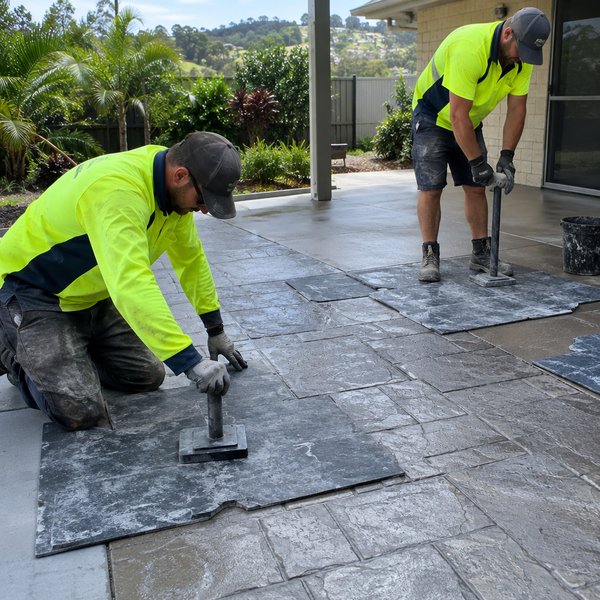
We spread release agent over the surface, then lay the stamping mats in sequence and tamp them down evenly. The timing depends on how fast the slab is setting on the day, and humidity plays a big part in that. Texture skins and hand tools finish off the edges, steps and corners that the large mats cannot reach.
Once the concrete has hardened enough, we wash off the excess release agent and saw cut control joints along the pattern lines. After the slab has cured and dried properly, we apply the sealer, adding anti-slip grit to areas that get wet or carry vehicles. The sealer deepens the colour and protects the surface from stains and UV.
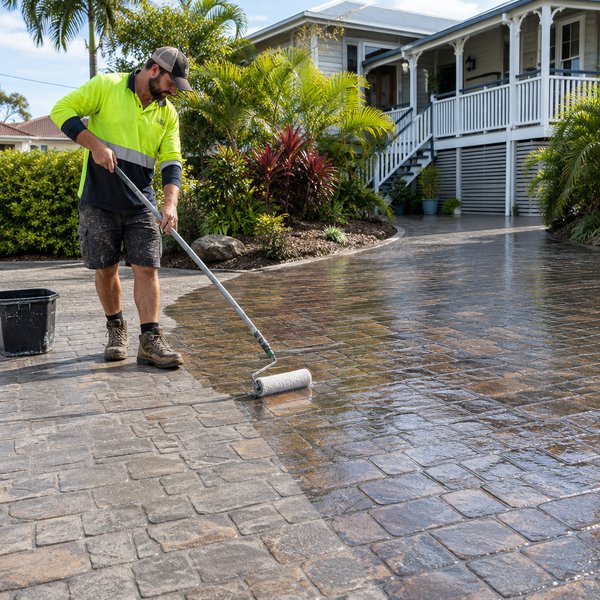
A decorative finish built for heavy rain, humidity and Queensland sun
You get a slate, flagstone or cobble look on one solid slab. You won't be dealing with sunken pavers, weeds pushing up through joints, or ants carting sand out after a wet season. Heavy downpours run off the surface instead of washing out bedding sand.
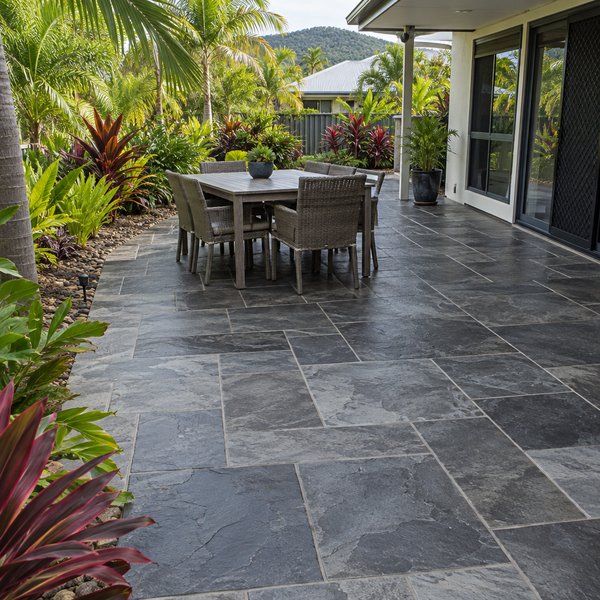
Oxide pigments run through the full depth of the concrete, so a chip or scuff doesn't expose bare grey underneath. A good sealer protects that colour from UV and stains. When it starts to look tired, a reseal brings the depth back without any need to replace the slab.
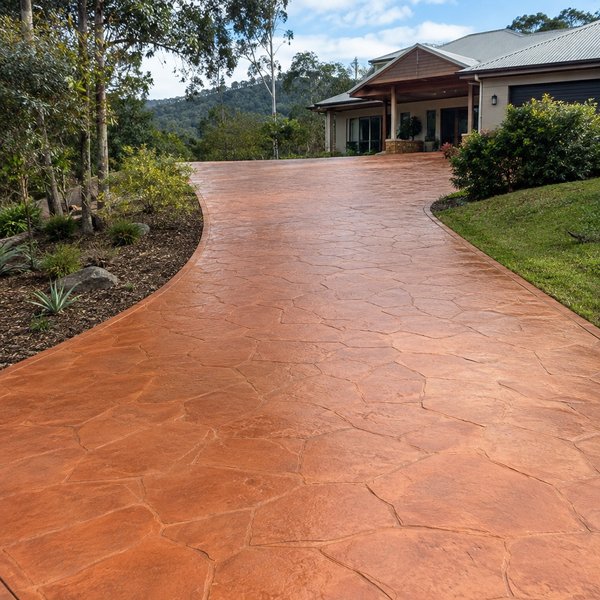
Stamped textures give your feet more to grip than a smooth trowelled finish. We add anti-slip grit to the sealer where wet feet or tyres cross the surface. That matters on steep hinterland driveways and pool surrounds during the wet season.
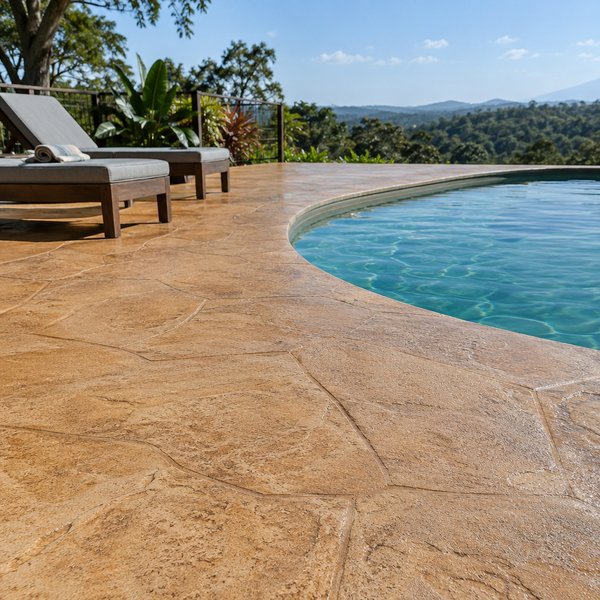
We plan pours around storm season and humidity, and we judge stamping time by how the slab is behaving on the day. Sealing only happens once the concrete is dry, which helps avoid cloudy patches later on.
Nambour blocks often have reactive clay and a decent fall. We compact the base properly, set falls so water drains away from your house, and place control joints along pattern lines so cracking is controlled and hard to spot.
We talk through how base colours and release agent tones work together, and which patterns suit a driveway compared with a patio. You'll know what the finished surface will look like before any concrete arrives.
We can pour your stamped entertaining area, a matching path and a plain or exposed aggregate driveway as one job. Levels, colours and joints line up across the whole property.
Common questions answered
The main factors are the area, site access, how much digging and base prep the block needs, the slab thickness, and the pattern you choose. Multi-colour finishes, borders and steps take more labour than a single colour with one pattern. We measure up on site and give you a written quote based on your actual job.
Sealed concrete can get slick when wet, which is why we mix anti-slip grit into the sealer for driveways, ramps and pool surrounds. Patterns with more texture, such as slate or flagstone, also give better grip than smoother patterns. On very steep driveways we might suggest exposed aggregate as an option instead.
This is usually called blushing. It happens when moisture gets trapped under an acrylic sealer, and it is common in humid hinterland conditions or when sealer goes down on damp concrete. Most of the time we can fix it by reactivating or stripping the sealer and resealing in dry weather.
It depends on sun exposure, foot and vehicle traffic, and the type of sealer. A fully exposed driveway wears faster than a covered patio. When water stops beading on the surface or the colour starts looking dull and patchy, it is time to reseal.
Rain on a fresh slab can wash out colour and ruin the stamped texture, so we watch the forecast closely and reschedule if a storm looks likely. We keep plastic sheeting on site to cover the surface if a shower arrives unexpectedly. We'd rather move the pour than lose the finish.
We provide Coloured & Stamped Concrete throughout Nambour, QLD and surrounding suburbs.
Don't see your area? Contact us to check if we service your location!
View All Areas